Overcrowding at the Accident and Emergency Centre of Korle-Bu Teaching Hospital has been attributed to deeper structural problems within Ghana’s healthcare system, particularly an ineffective referral network, according to the Korle-Bu Doctors’ Association (KODA).
In a statement issued on March 23, 2026, the association explained that many lower-tier health facilities are unable to adequately manage certain cases, resulting in frequent referrals to Korle-Bu, which has effectively become the default destination for a wide range of patients.
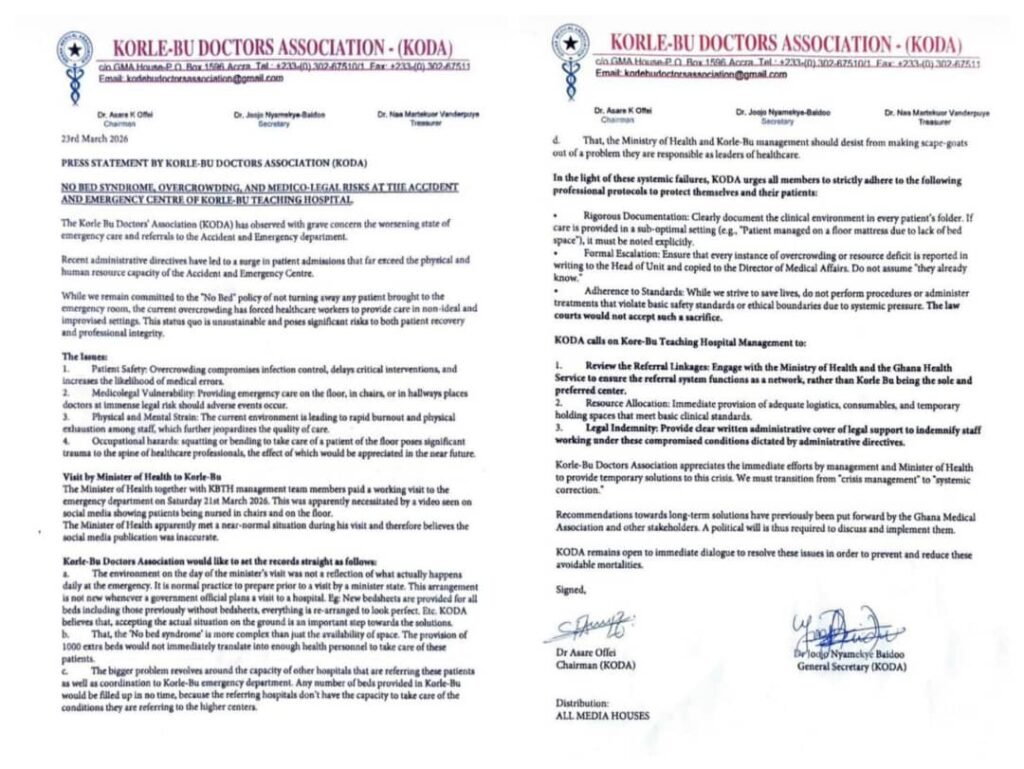
KODA cautioned that increasing bed capacity alone would not resolve the crisis. It pointed out that even the addition of 1,000 beds would not address the shortage of healthcare personnel needed to care for patients. Furthermore, the beds would likely be filled almost immediately, as referring facilities continue to lack the capacity to treat the cases they send to higher-level centres.
The doctors emphasized that the situation reflects broader systemic weaknesses, where referral pathways are not functioning as a well-coordinated system.
To address the issue, the association is calling on management to engage the Ministry of Health and the Ghana Health Service in efforts to strengthen the referral framework. This, they say, would ensure patients receive care at the appropriate level and reduce the burden on a single facility.
Public concern over conditions at the emergency centre has grown in recent times, with reports highlighting congestion and patients being treated in less-than-ideal environments.
Beyond operational challenges, KODA also raised alarm over the legal risks faced by doctors working under such circumstances. Members have been advised to thoroughly document the conditions under which they provide care, particularly when forced to treat patients in overcrowded or unsuitable spaces, including on the floor.
They have also been encouraged to formally report all cases of overcrowding and shortages of resources to their superiors, including Heads of Unit and the Director of Medical Affairs.
The association further urged its members to uphold professional and ethical standards despite the pressure, warning that the courts may still hold clinicians accountable for adverse outcomes, regardless of the difficult conditions.
KODA noted that proposals to reform Ghana’s healthcare system have already been made by the Ghana Medical Association and other stakeholders. However, it stressed that meaningful progress will depend on the political will to implement these recommendations.
Ultimately, the association believes that resolving the situation will require a comprehensive approach that builds capacity across all levels of healthcare delivery, rather than focusing solely on expanding infrastructure at one hospital.

Journalist
Source: Wesleyannews.com
Do you have a story to share? Send it to our editorial team at editor@wesleyannews.com