The Presiding Bishop of the The Methodist Church Ghana, The Most Rev. Prof Johnson Asamoah-Gyadu, has expressed deep reservations about Ghana’s growing interest in commercializing cannabis for economic gain.
In a statement shared on his official Facebook page, the respected theologian and the Head of The Methodist Church Ghana acknowledged that several Western nations have relaxed regulations to allow cannabis use for medicinal purposes. However, he questioned whether those countries have found effective ways to commercialize the substance without undermining restrictions on its recreational use.
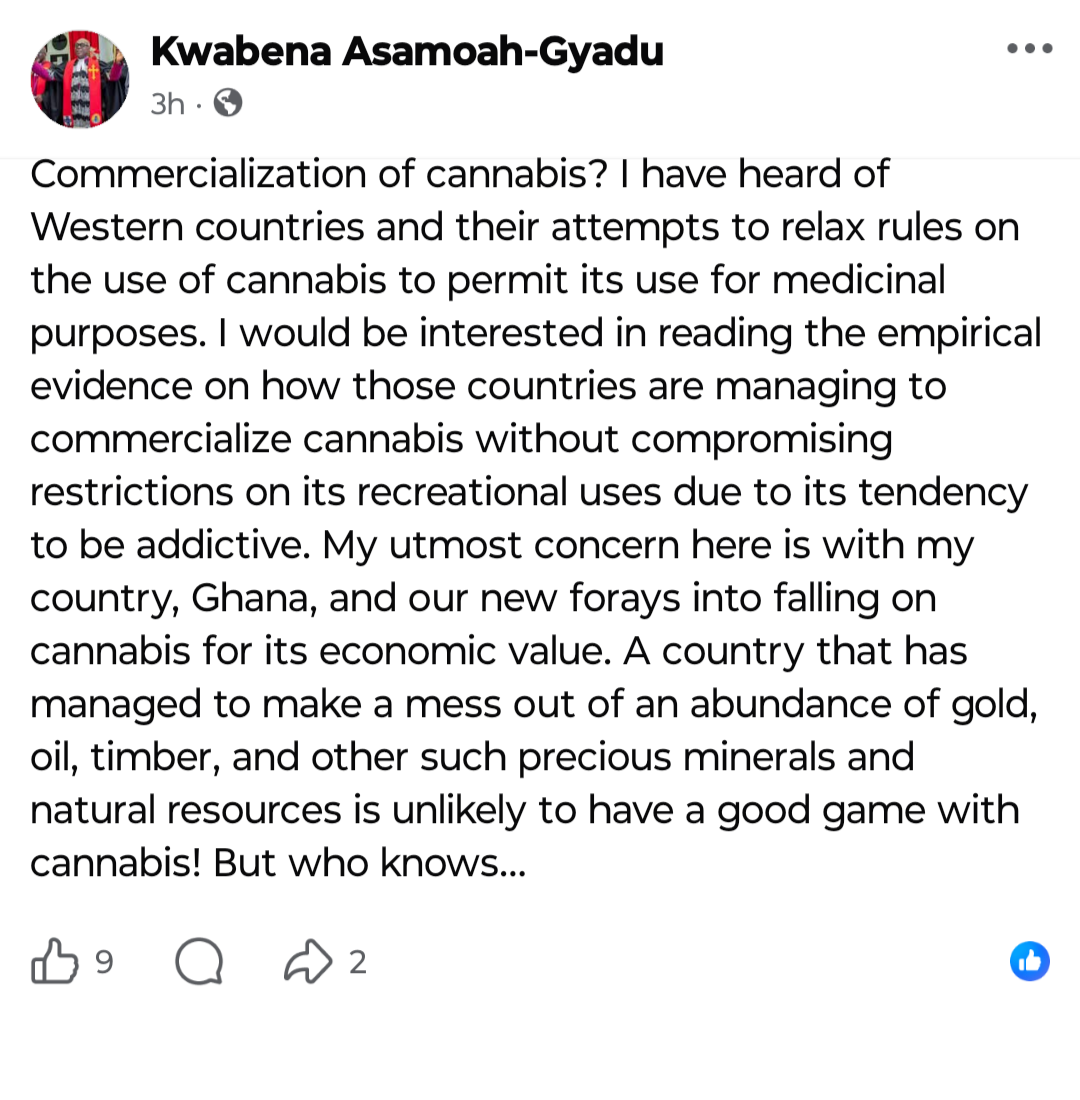
“I would be interested in reading the empirical evidence on how those countries are managing to commercialize cannabis without compromising restrictions on its recreational uses due to its tendency to be addictive,” he noted.
While recognizing the global shift toward regulated medicinal cannabis industries, the Presiding Bishop’s central concern lies closer to home. He cautioned that Ghana’s track record in managing its natural resources does not inspire confidence in its ability to successfully navigate a new cannabis-driven economic venture.
“A country that has managed to make a mess out of an abundance of gold, oil, timber, and other such precious minerals and natural resources is unlikely to have a good game with cannabis,” he remarked, underscoring the need for careful reflection and accountability.
His comments come at a time when discussions around cannabis cultivation and industrialization in Ghana have intensified, with proponents arguing that the crop could generate significant revenue, create jobs, and diversify the economy. Critics, however, continue to raise concerns about regulation, public health implications, and the risk of abuse.
The Presiding Bishop’s intervention adds a moral and governance dimension to the debate, urging policymakers and citizens alike to consider whether the country has the institutional discipline and regulatory capacity to manage such a sensitive industry responsibly.
Concluding his remarks with a cautious openness, he added, “But who knows…” — a statement that reflects both skepticism and a willingness to see how events unfold.
As Ghana navigates this complex policy terrain, the voice of one of the nation’s leading church figures is likely to shape ongoing conversations about economic priorities, public health, and national stewardship.
Read the statement below

Investigative Journalist & News Editor:
Contact: Editor@wesleyannews.com
Source: Wesleyannews.com
Do you have a story to share? Send it to our editorial team at editor@wesleyannews.com