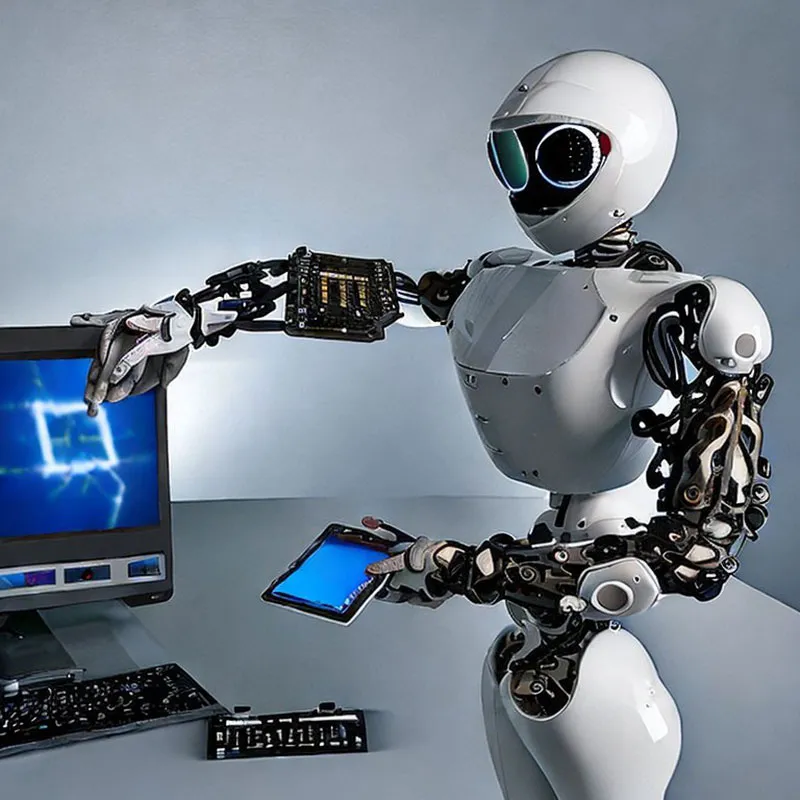
The world stands on the brink of an extraordinary technological transformation powered by Artificial Intelligence (AI). Once the subject of science fiction, AI has now emerged as a tangible force reshaping how we work, live, and interact. From personalized healthcare to autonomous vehicles, AI is infiltrating every industry and influencing social structures at a scale never witnessed before.
But as with every revolution, this one carries great promise and significant risks. While AI holds the power to boost efficiency, solve global problems, and drive economic growth, it also raises profound ethical questions about bias, data privacy, surveillance, and the future of employment. This article explores the breadth of AI’s impact, the opportunities it presents, the challenges it poses, and what lies ahead for humanity in an AI-driven future.
The Rise of Artificial Intelligence
AI is not entirely new. Its roots can be traced back to the 1950s, when scientists like Alan Turing and John McCarthy laid the groundwork for machines that could "think." However, the modern surge in AI’s capabilities is largely due to two developments:
- Big Data – The explosion of digital information from smartphones, social media, and connected devices.
- Advanced Computing Power – High-performance processors and cloud computing allow AI systems to process vast amounts of data at lightning speed.
These advancements have given rise to machine learning (ML) and deep learning technologies, enabling computers to “learn” patterns and make decisions without being explicitly programmed.
Transforming the Workplace
One of AI’s most visible impacts is in the workplace. Businesses worldwide are adopting AI-powered tools to enhance efficiency, reduce costs, and improve decision-making.
- Automation: Robots and intelligent software are handling repetitive tasks, from factory assembly lines to data entry.
- Recruitment & HR: AI algorithms screen resumes, analyze job descriptions, and even predict employee turnover.
- Decision Support: Predictive analytics guide executives in forecasting market trends, managing risks, and optimizing supply chains.
While this transformation boosts productivity, it also raises concerns about job displacement. Studies suggest that millions of roles, especially in manufacturing, customer service, and administrative work, could be automated. Yet, AI is also creating new opportunities in fields like AI ethics, data science, and human–machine collaboration.
Healthcare: A Game-Changer
Few industries stand to benefit from AI as much as healthcare. With the ability to analyze massive medical datasets, AI tools are transforming patient care:
- Diagnostics: AI systems detect diseases like cancer, diabetes, and heart conditions earlier than traditional methods.
- Drug Discovery: Machine learning accelerates the process of developing and testing new drugs, potentially saving millions of lives.
- Personalized Medicine: Algorithms analyze genetic information to recommend treatment tailored to individual patients.
- Administrative Efficiency: AI reduces paperwork by automating hospital records and insurance claims.
For instance, Google’s DeepMind has developed AI that can predict kidney failure up to 48 hours before doctors can detect it, highlighting the life-saving potential of this technology.
AI in Everyday Life
AI is not confined to specialized industries; it is deeply embedded in our daily routines.
- Smart Assistants: Siri, Alexa, and Google Assistant help millions manage schedules, play music, and control smart homes.
- Transportation: Self-driving cars, led by companies like Tesla and Waymo, promise safer roads and fewer traffic jams.
- Entertainment: Streaming platforms such as Netflix and Spotify use AI to recommend movies and music based on user preferences.
- E-commerce: Amazon’s recommendation engine drives a significant portion of its sales by predicting customer interests.
These conveniences come with trade-offs, as companies rely on massive amounts of personal data to fine-tune their services.
The Ethical Dilemma
The rapid growth of AI raises complex ethical and moral concerns:
- Bias in AI Systems – Since algorithms are trained on human-generated data, they can inherit societal biases, leading to discrimination in hiring, lending, or law enforcement.
- Data Privacy – With AI-powered surveillance and predictive analytics, the boundaries between public and private life are increasingly blurred.
- Accountability – If an AI-driven car causes an accident or an algorithm denies someone healthcare, who should be held responsible—the programmer, the company, or the machine?
- Autonomy vs. Control – How much power should we grant machines to make decisions that affect human lives?
Tech giants and policymakers are now grappling with how to create frameworks that ensure fairness, accountability, and transparency in AI systems.
Economic Implications
AI could add $15.7 trillion to the global economy by 2030, according to PwC. The benefits, however, may not be evenly distributed.
- Developed countries with advanced tech infrastructure will likely see the biggest gains.
- Developing countries risk falling behind unless they invest heavily in digital skills and infrastructure.
- Wealth inequality may widen, as companies that control AI technologies amass greater influence and resources.
Governments must step in to regulate, redistribute, and ensure AI becomes a tool for inclusive growth rather than division.
The Future of Education
To prepare the workforce of tomorrow, education systems must evolve. AI is already reshaping classrooms:
- Adaptive Learning: Platforms like Khan Academy and Coursera adjust lessons to suit each learner’s pace.
- Virtual Tutors: AI bots answer student questions in real time, providing instant feedback.
- Administrative Tasks: AI automates grading and attendance, freeing teachers to focus on personalized instruction.
But equally important is teaching digital literacy, critical thinking, and ethics, ensuring students are not only users but also shapers of AI technology.
Security and Geopolitical Concerns
AI is increasingly a matter of national security. Countries are racing to develop AI-powered defense systems, cyber tools, and surveillance networks.
- AI in Warfare: Autonomous drones and predictive systems raise concerns about machines making life-and-death decisions.
- Global Competition: The U.S., China, and Europe are investing billions in AI research, sparking fears of a new tech-driven arms race.
- Cybersecurity: Hackers can exploit AI to launch sophisticated cyberattacks, while defenders use AI to detect threats faster.
This geopolitical dimension underscores the need for international collaboration and treaties to regulate AI’s military use.
Striking the Balance
The future of AI will depend on how we manage the delicate balance between innovation and responsibility. To achieve this, experts recommend:
- Robust Regulation: Governments must craft policies to protect privacy, ensure fairness, and prevent misuse.
- Ethical AI Development: Companies should integrate fairness and accountability into their design processes.
- Reskilling Workforce: Workers displaced by automation must be retrained for emerging jobs.
- Global Cooperation: Nations must collaborate to avoid conflict and share the benefits of AI equitably.
Conclusion
Artificial Intelligence is not just a technological tool—it is a defining force of the 21st century. Its influence spans across industries, communities, and personal lives. While AI has the power to solve some of humanity’s greatest challenges, it also brings unprecedented risks that cannot be ignored.
The future will not be determined solely by what AI can do, but by the choices we make today about how it is developed, governed, and applied. As individuals, businesses, and governments, we must ensure AI remains a force for empowerment rather than division, for progress rather than inequality.
AI is here to stay. The question is: Will we master it, or will it master us?